
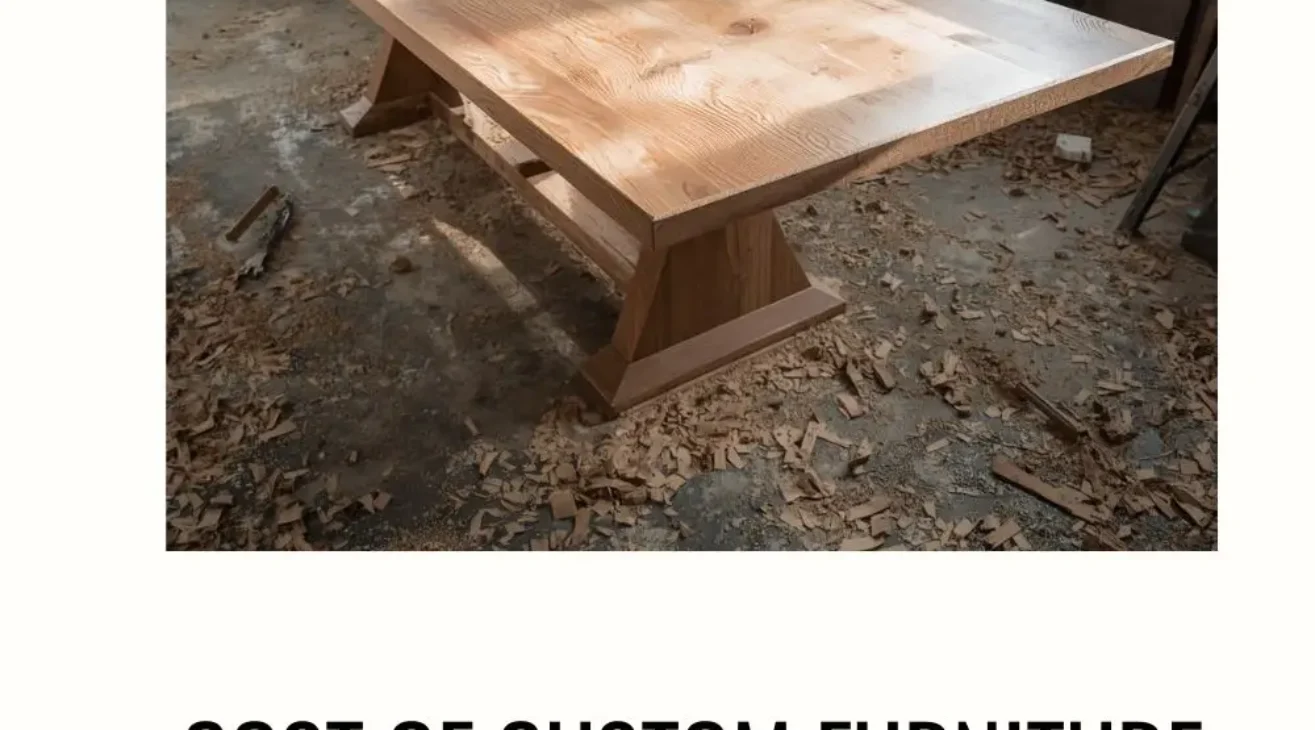
Cost of Custom Furniture in Australia (2026 Complete Guide)
Anyone who has priced a custom dining table, bed frame, vanity, or sideboard in Australia knows the feeling. One quote looks surprisingly reasonable, the next is double, and suddenly the whole category feels impossible to compare. The problem is not that makers are being mysterious. It is that ‘custom furniture’ covers a huge range of design work, material quality, hardware, finishing systems, and labour.
This guide gives Timber & Time readers a practical way to think about pricing before they enquire. It is not meant to turn handmade work into a one-line formula. Instead, it helps buyers understand what drives the number, where it makes sense to spend more, and how to compare quotes properly so they can decide whether bespoke furniture is the right move for their home.
What you are actually paying for
Custom furniture pricing is built from several layers. There is the design stage, where measurements, drawings, edge profiles, and structural decisions are worked out. Then there is material selection, which can vary widely depending on species, board widths, availability, and whether the timber needs special preparation. Finally there is fabrication, sanding, finishing, curing, delivery, and sometimes installation.
That matters because buyers often compare a handmade piece to a mass-produced retailer item as if both prices are measuring the same thing. They are not. One is typically made for broad efficiency at a factory scale; the other is produced in small batches or as a one-off, with decisions made around your room, your brief, and the details that will affect how the piece ages.
- Design time and revisions
- Material cost and availability
- Workshop labour, finishing, delivery, and installation
Indicative price bands buyers usually encounter
Smaller custom pieces such as bedside tables, stools, or simple hall tables often sit at the lower end of the custom market because they require less material and less engineering. Medium-sized commissions such as coffee tables, desks, and entertainment units usually move up quickly once drawers, cable management, or complex joinery are involved. Dining tables, larger sideboards, and built-in style pieces often become the major-ticket items.
Readers should treat any pricing guide as a range rather than a promise. A modest table in a straightforward design can come in far lower than a thick, wide-board statement piece with a sculptural base. The safest mindset is to use pricing bands to set expectations, then compare actual quotes on like-for-like scope.
- Small custom pieces: lower complexity, lower material volume
- Storage pieces: moderate to high labour because of drawers, doors, and hardware
- Statement dining tables and bed frames: higher spend because of size, finish, and structure
The biggest factors that push the price up or down
Size is obvious, but complexity is usually the hidden driver. A plain rectangular dining table can be surprisingly efficient to build well. Add curves, custom metalwork, integrated extension systems, waterfall edges, unusual base geometry, or heavily figured timber, and the labour can jump fast. None of those upgrades are bad; buyers simply need to recognise that they are paying for more than dimensions.
Timber species and finish also matter. Wider clear boards, highly consistent grain, weather-resistant finishes, premium hardware, and stain matching all add cost. Access conditions can do the same. A piece that must be delivered up narrow stairs or assembled on site takes more planning than one that can be carried straight in from the truck.
How to compare custom quotes properly
The smartest buyers compare scope before they compare totals. When two quotes are far apart, the reason is usually visible once you ask for specifics: timber species, thickness, finish system, number of drawers, hardware brand, installation, design revisions, and delivery inclusion. Without those details, it is easy to assume one studio is overpriced when in reality the projects are not equivalent.
Readers should also pay attention to communication quality. A clear, itemised quote usually signals a mature process. That tends to mean better planning, fewer surprises, and a more confident handover. Cheap prices can become expensive if the project requires rework, repair, or compromise six months later.
- Compare timber, dimensions, and finish system line by line
- Ask how many design revisions are included
- Confirm whether delivery and installation are part of the total
When custom furniture is worth the premium
Custom makes the most sense when a room has awkward proportions, when a buyer wants a particular style that standard retail misses, or when the goal is to keep a piece for a long time. Open-plan dining areas, compact apartments, and unusual alcoves are classic examples. A table that is exactly right for the circulation space can be more valuable than a cheaper piece that is merely close enough.
It is also worth paying more when the piece will be used daily and heavily. Dining tables, bed frames, desks, storage, and bathroom vanities do real work. If the brief is clear and the maker is a good fit, custom furniture often becomes one of the few purchases in a home that feels both personal and durable.
How to spend smarter without going cheap
Buying smarter does not always mean cutting corners. Sometimes it means choosing a simpler silhouette, using one premium focal piece instead of several average ones, or being flexible on timber species if availability changes. It can also mean phasing a room over time: invest first in the dining table, then come back for benches or a matching sideboard later.
This is where the Timber & Time model is useful. Readers can move from educational posts into a curated set of custom, vintage, and restoration options. That lets them decide whether the right answer is a new commission, a restored vintage piece, or a more strategic purchase that still fits the wider room story.
Frequently asked questions
Why can two custom furniture quotes be so different?
Because the specifications are rarely identical. Differences in timber quality, joinery, finish, hardware, design time, and delivery can change the total dramatically.
Is custom furniture always more expensive than retail?
Not always. It is usually more expensive than flat-pack, but it can compare surprisingly well against high-end retail once you account for materials and longevity.
Should I share my budget with a maker?
Yes. A realistic budget helps a maker suggest the right timber, finish, and design direction instead of quoting a brief that was never viable.
The bottom line
The real question is not whether custom furniture is expensive. It is whether the price matches the value of the design, the material, and the years of use the piece is likely to see in your home.
When buyers understand what sits inside the quote, they stop treating bespoke pricing like a mystery and start making much sharper decisions. That is exactly the point of a good content-and-directory funnel.
Ready to take the next step? Ready to keep browsing? Timber & Time connects Australian homeowners with custom makers, vintage sellers, and restoration specialists worth contacting.
Common buying mistakes to avoid
When readers research cost of custom furniture in Australia, they often focus on one visible variable and ignore the rest. That variable might be price, timber tone, a hero image, or a single measurement. But furniture decisions almost never succeed on one factor alone. Fit, use, durability, finish, delivery, and how the piece interacts with the wider room all matter. A narrow comparison can make the cheaper or prettier option look better than it really is.
The easiest way to avoid that trap is to compare furniture as a system rather than a snapshot. What will daily use feel like? What maintenance will the owner realistically do? Will the proportions still feel right six months later? Slowing down to ask those questions is one of the highest-return habits in furniture buying.
A practical decision framework
A simple decision framework can help buyers avoid overwhelm. First, define the role of the piece: anchor item, supporting item, storage, or occasional use. Second, measure the room and any circulation paths that matter. Third, decide which two priorities matter most: budget, exact fit, style, durability, or delivery speed. Once those priorities are ranked, many options remove themselves naturally.
This is especially useful when comparing custom, vintage, and ready-made paths. If delivery speed matters more than anything else, custom may not win. If exact fit or material integrity matters most, the calculation changes. Buyers who rank priorities clearly tend to make decisions they remain happy with for longer.
How this advice plays out in real homes
Real homes are messy in the best possible way. Kids climb furniture, open-plan rooms carry multiple functions, apartments need every centimetre to work, and entertaining habits shift over time. That is why purely theoretical buying advice can fall flat. The most useful content helps readers imagine ordinary life with the piece, not only the styled version of the room.
For Timber & Time readers, that often means choosing furniture that looks good but also earns its keep. A table should handle family dinners. A bed frame should suit storage needs. A TV unit should tame cables. A material choice should still make sense after a few years of use. The stronger the everyday logic, the better the purchase.
How to use Timber & Time after reading
Once readers understand what they are looking for, the next step is to move from broad searching to a more curated shortlist. That is where Timber & Time can add a lot of value. The site sits around custom, vintage, and restored furniture rather than treating all products as interchangeable, which makes it easier to find people and pieces aligned with a slow-furniture mindset.
In practice, this means the blog can do the educational heavy lifting while the directory supports the decision. Readers learn what to compare, then browse with better filters. The result is a cleaner path from content to enquiry.
A quick reader checklist
Before making a decision related to cost of custom furniture in Australia, it helps to pause and run through a short checklist: Have I measured the room properly? Do I know my realistic budget range? Have I compared at least two or three relevant options? What matters most here: speed, exact fit, material quality, or long-term durability? This checklist is deliberately simple, but it catches the majority of avoidable buying mistakes.
Readers should also note any practical constraints before they enquire, such as stairs, narrow access, children, pets, heavy daily use, or the likelihood of future house moves. These factors influence good furniture choices far more than trend boards do.
What success looks like six months later
A strong furniture decision usually feels even better after the novelty has worn off. The piece fits the room properly, the materials still feel right, and everyday use confirms that the buyer chose well. If a decision only felt convincing on the day of purchase but becomes annoying in daily life, something important was missed in the comparison stage.
This is why slower decision-making tends to outperform impulse buying. When readers take time to measure, shortlist, and understand the trade-offs, they often end up with furniture that keeps earning its place instead of being quietly regretted.
How to adapt this advice to your own brief
No article can choose the final answer for the reader, because every home, budget, and timeline is slightly different. The best use of a guide like this is to turn broad interest in cost of custom furniture in Australia into a narrower brief: the room dimensions, the non-negotiables, the likely budget band, and the kind of maker or seller worth contacting next. That brief is what converts inspiration into a useful decision.
Readers who take ten extra minutes to write those notes down usually get far better results from their next enquiry. It gives makers and sellers something concrete to respond to, and it helps the buyer recognise a good fit much faster.