
Danish Paper Cord: What It Is and Who Can Fix It in Australia
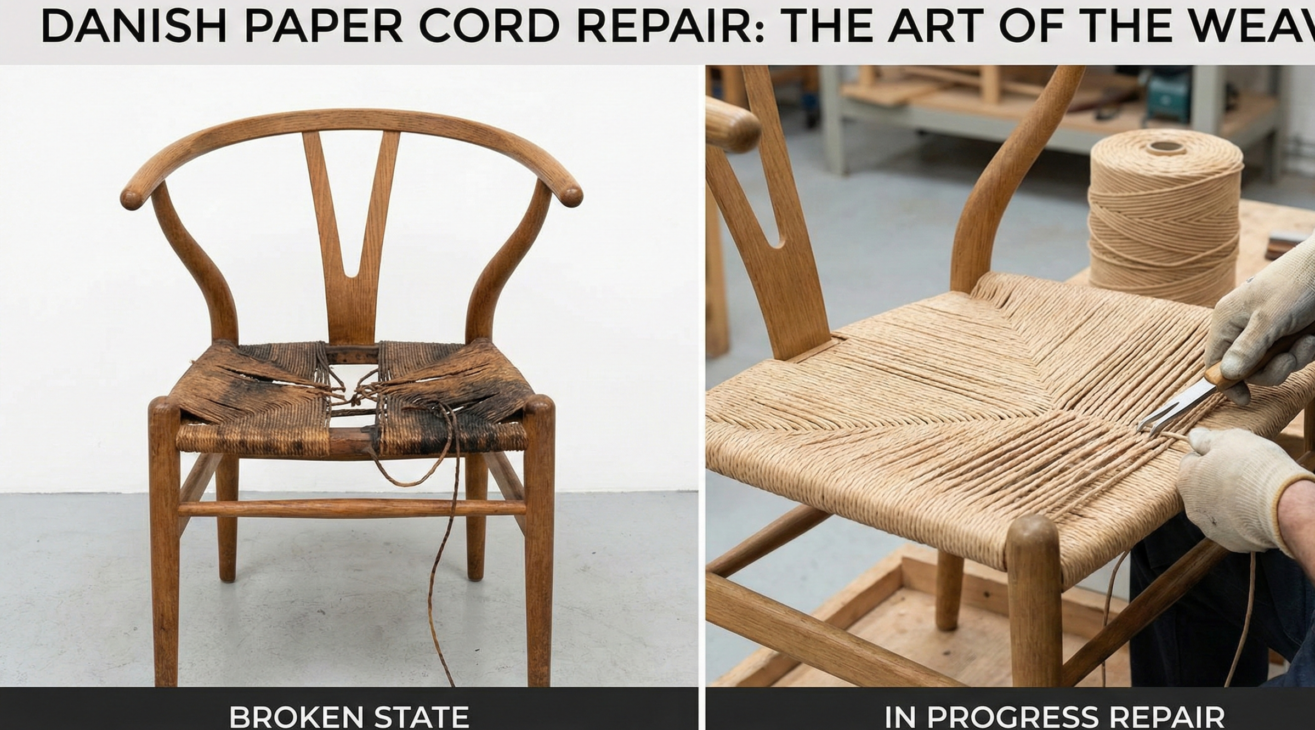
If you own a set of mid-century dining chairs—specifically the iconic Hans Wegner “Wishbone” (CH24) or the elegant J.L. Møller models—you know the feeling of dread.
You sit down for dinner, and suddenly you hear it. A dry snap.
You look down to find a single strand of the woven seat has broken. And once one goes, the whole seat begins to unravel.
For many Australian owners, this is the moment of panic. Is the chair ruined? Can it be fixed? And why did it happen?
The good news: Your chair is not ruined. In fact, replacing the cord is a standard part of the chair’s lifecycle (every 20–30 years). The bad news? Fixing it is an art form that very few people in Australia still know how to do.
Here is everything you need to know about Danish Paper Cord, and how to get your design classics back to showroom condition.
What Actually Is “Paper Cord”?
It sounds fragile, doesn’t it? “Paper.”
But Danish Paper Cord is deceptively strong. It was developed during World War II as a substitute for natural rattan, which was in short supply. Danish designers like Hans Wegner quickly realized that this “substitute” was actually superior to the original.
It is made from paper sourced from sustainable forests, twisted tightly into a three-ply strand.
- It is incredibly durable: It doesn’t stretch or sag like cane.
- It is comfortable: It stays cool in summer and warm in winter.
- It is sustainable: It is biodegradable and unbleached.
There are generally two types you will see in Australia:
- Natural (Unbleached): The classic straw/oatmeal colour found on 90% of vintage chairs.
- Black: Dyed cord, often used for a more modern, graphic look.
The “Sticker Shock”: Why Repair Costs What It Costs
When you call a restorer for a quote to re-weave a Wishbone chair, you might be surprised by the price. It often ranges from $250 to $450 per chair.
“For a bit of string?” you ask.
You aren’t paying for the string. You are paying for the sheer physical labour and geometry involved.
1. The Quantity of Material A single Wishbone chair requires approximately 120 metres of continuous cord.
2. The Muscle Power Weaving is not sewing. It is a full-body workout. The weaver must maintain extreme, consistent tension on the cord for hours. If they pull too tight, the chair frame can warp or snap. If they pull too loose, the seat will sag in a month. They wear heavy gloves to stop the cord from slicing their fingers.
3. The Complexity There is no machine that can do this. It is 100% hand-woven. A Møller chair, for example, uses a complex “L-nail” system inside the frame. The weaver has to navigate a distinct pattern—weaving over, under, and across—while keeping the lines perfectly straight. A single chair can take a skilled professional 8 to 10 hours to complete.
Can I Just DIY It? (The YouTube Trap)
If you are handy, you might be tempted to watch a YouTube tutorial and buy a roll of cord online.
We strongly advise against this.
We have seen countless beautiful vintage frames ruined by DIY attempts.
- Warped Frames: The tension of the cord pulls the timber legs inward. A professional knows how to brace the frame to prevent this. A novice does not, often snapping the joinery of the chair permanently.
- The “Smile” Line: Getting the front rail line straight requires immense skill. DIY jobs often end up with a wonky, wavy line that ruins the aesthetic of the chair.
Unless you are looking for a new hobby and don’t mind risking the chair, leave this one to the pros.
How to Maintain Your Paper Cord (So It Lasts 30 Years)
Once you have your chairs restored (or if you have new ones), simple care will extend their life.
- Watch the Jeans: The #1 killer of paper cord is the metal rivets on the back pockets of denim jeans. They act like little saws, cutting through the fibres every time you slide in and out of the chair.
- Clean Spills Immediately: Paper cord has a wax coating, but it is still paper. Red wine or oil will soak in. Blot (don’t rub) spills instantly with a damp, colourless cloth.
- Vacuum It: Dust acts like sandpaper between the woven strands. Run your vacuum cleaner (with the brush attachment) over the seat once a month.
Who Can Fix It In Australia?
This is a dying trade. There are only a handful of master weavers left in Australia who specialise in the correct Danish techniques (specifically the complex Møller and Wegner patterns).
Most general upholsterers do not offer this service, as it requires completely different tools and skills to fabric upholstery.
At Timber & Time, we have hunted down the specialists who keep this craft alive—from the back streets of Melbourne’s inner north to the artisan workshops of Sydney.
Don’t let your design icon sit in the garage gathering dust.
If you have a chair that has snapped, send us a photo. We will connect you with a verified weaver who can restore the tension, the pattern, and the beauty of your piece.
[Get a Paper Cord Repair Quote]