Oil, Wax, or Poly? The Ultimate Guide to Maintaining Your Custom Timber Table
The day has finally arrived. The delivery crew has just left, and sitting in the centre of your dining room is your stunning, custom-made Australian hardwood table.
It’s perfect. The grain of the Messmate is hypnotic; the smell of the Blackbutt is intoxicating.
And then, the fear sets in.
Your toddler walks in with a sticky juice box. Your partner puts down a hot coffee mug without a coaster. You suddenly realize you have no idea how to protect this expensive investment.
A quick Google search for “how to protect wood table” leads to a confusing wormhole of conflicting advice about oils, waxes, varnishes, and polyurethanes.
At Timber & Time, we believe you should enjoy your furniture, not live in fear of it. The truth is, there is no single “best” finish—only the right finish for your lifestyle.
Here is the definitive, jargon-free guide to understanding what’s on your table, and how to keep it looking heirloom-quality for decades.
THE GOLDEN RULE: Ask Your Maker First
Before you buy any product or attempt any DIY maintenance, you must know this:
The finish is part of the furniture’s warranty.
If your custom maker applied a specific hardwax oil, and you decide to pledge it with supermarket silicon spray, you may ruin the finish and void your warranty.
Always ask your maker these two questions upon delivery:
- “What specific product and brand is on this table?” (e.g., Osmo Polyx Oil, matte finish).
- “What do you recommend for daily cleaning?”
If you bought vintage, or don’t know what the finish is, read on to identify it.
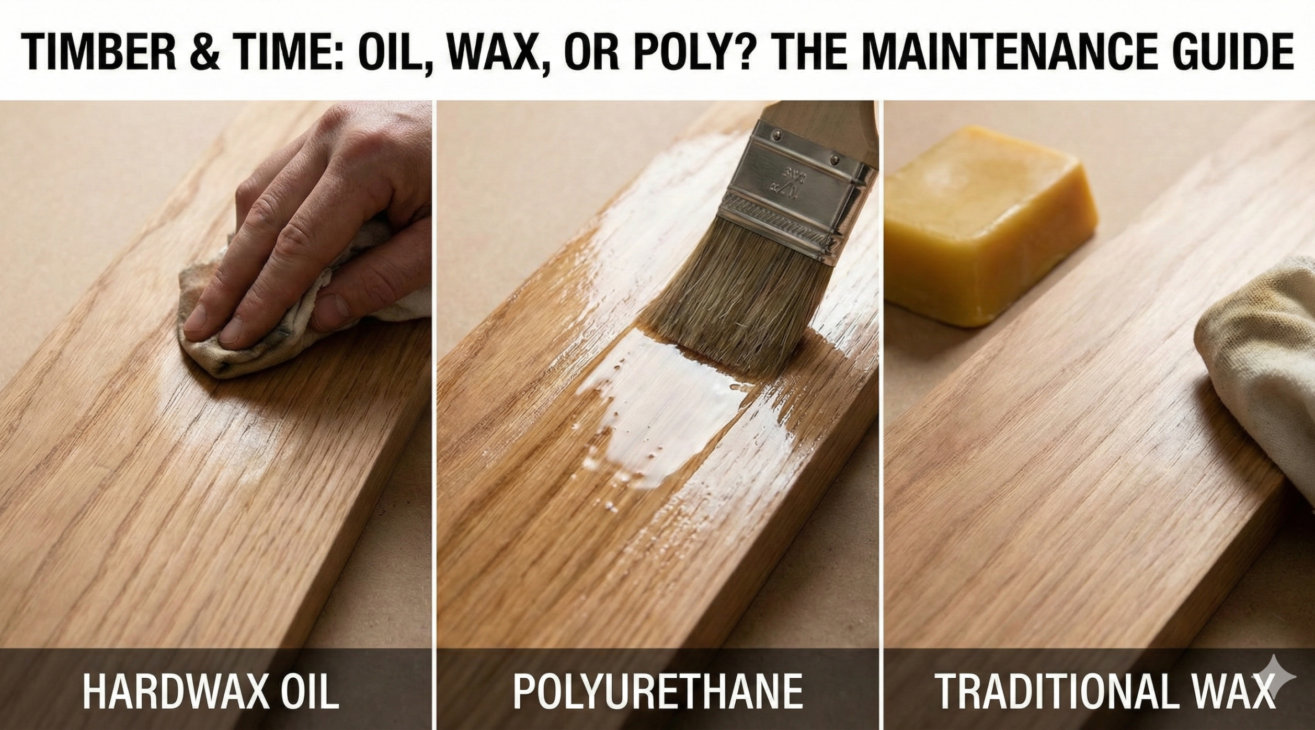
Contender #1: Hardwax Oils (The Modern Artisan’s Choice)
Examples: Osmo, Rubio Monocoat, Fiddes.
If you bought a high-end custom table in Australia in the last 5 years, there is an 80% chance it has this finish.
How it works:
Unlike old-school varnishes that sit on top of the wood like a plastic sheet, hardwax oils soak into the timber grain and harden from within.
- The Look & Feel: Incredible. It looks matte, natural, and feels like real silky timber, not plastic. It highlights the grain beautifully.
- The Lifestyle Fit: Great for households that are generally careful but want a beautiful, natural aesthetic.
The Pros:
- Spot Repairable: This is the massive advantage. If you get a bad scratch or a stubborn stain, you can sand back just that 10cm patch and re-apply the oil yourself with a rag. It will blend seamlessly. You cannot do this with poly.
- Food Safe: Most high-quality brands are certified food-safe once cured.
The Cons:
- Maintenance Required: It is not “set and forget.” Depending on usage, you may need to re-apply a thin “top-up” coat every 12–24 months to keep it water-resistant.
- Not Bulletproof: If you leave a red wine spill overnight, it will stain.
Contender #2: Polyurethane / Varnish (The Bodyguard)
Examples: Two-pack poly, marine varnish.
This is the traditional “tough” finish, often used in high-traffic commercial settings or by parents who want zero maintenance.
How it works:
It forms a hard, impermeable plastic layer sitting on top of the timber.
- The Look & Feel: It feels smooth and slightly cold, like plastic. It can range from matte to high-gloss. It tends to slightly obscure the natural texture of the wood grain.
- The Lifestyle Fit: Perfect for messy families, rental properties, or anyone who wants to abuse a table and never think about maintenance.
The Pros:
- Bulletproof: You can leave a water glass on it overnight, spill spaghetti on it, or let kids draw on it, and it will wipe right off.
- Zero Maintenance: You don’t need to re-oil it. It stays the same for 10–20 years.
The Cons:
- The “White Scratch” Issue: Because it’s a clear plastic layer over dark wood, if you scratch it, the scratch shows up bright white.
- Impossible to Spot Repair: If it gets badly scratched or chipped, you cannot fix just that spot. The entire tabletop must be professionally sanded back to bare wood and re-sprayed in a booth.
Contender #3: Traditional Wax (The Confusion Causer)
Examples: Beeswax, Carnauba wax, “Furniture Polish.”
This is where most people get confused. Traditional wax is not a finish. It is a moisturizer.
If you put beeswax on raw timber, a glass of water will ring straight through it in five minutes.
How it works:
Wax is used over the top of other finishes (like French polish or older varnishes) to add a temporary shine and fill in microscopic scratches.
- When to use it: Only use wax if you have an antique piece and you want to give it a quick refresh, or if your maker specifically advises using a wax over their oil finish.
The Quick Comparison Guide
| Feature | Hardwax Oil | Polyurethane | Traditional Wax |
| How it feels | Natural, silky timber | Smooth plastic | Slightly tacky or waxy |
| Water resistance | Good (wipe spills quickly) | Excellent (bulletproof) | Poor |
| Heat resistance | Moderate | Good | Poor (melts easily) |
| Repairability | Easy DIY spot repairs | Difficult pro job only | Easy re-application |
| Maintenance | Re-oil every 1–2 years | None for decade+ | Frequent polishing |
Maintenance 101: The Daily Rules for ALL Tables
Regardless of whether you have Oil or Poly, these three rules will add decades to your table’s life.
1. Throw away the supermarket spray
Never use Mr Sheen, Windex, or generic multi-purpose cleaners on custom timber. They contain silicones and solvents that will break down oil finishes and make polyurethane impossible to refinish later.
- Use this instead: A damp (not wet) microfibre cloth. For greasy spills, use water with a tiny drop of pH-neutral dish soap.
2. Heat is the enemy
A hot saucepan straight off the stove will ruin almost any finish, causing white foggy marks or melting wax.
- Use this instead: Trivets and thick placemats for anything hotter than a coffee mug.
3. Watch the sun
Australian sun is harsh. If part of your table sits in direct sunlight from a window, that area will fade faster than the rest of the table over a few years. Try to rotate the table occasionally or use blinds during the hottest part of the day.
Summary
If you want the most natural look and are willing to do a little maintenance in exchange for the ability to fix scratches yourself, choose Hardwax Oil.
If you have three kids under five and you never want to think about your table again, choose a matte Polyurethane.
Did you inherit a table with a ruined finish that needs professional help?
Don’t DIY the hard stuff. Connect with a master craftsman who can strip and refinish your piece.
[Find a Furniture Restorer Near You]